Commercial roofs can be protected with several coating types, including silicone, acrylic, elastomeric, spray foam, and metal-specific systems. At D&N Coatings, we help Springfield property owners identify which coating type fits their roof’s material and condition before comparing pricing or contractors.
What Are the Main Roof Coating Types?
Commercial roof coatings generally fall into five categories, each formulated for a different roof surface and climate condition. Understanding these categories first makes it easier to narrow down options before requesting quotes from roof coating companies.
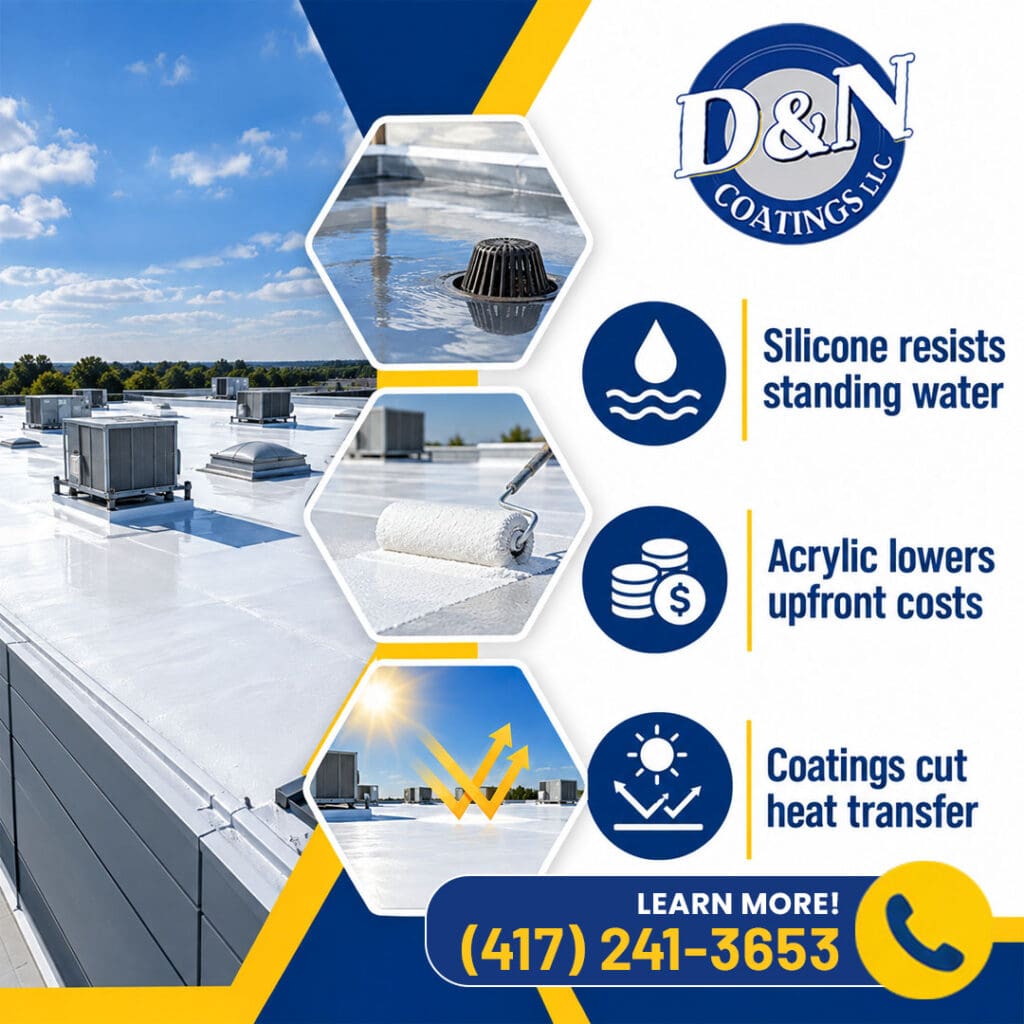
- Silicone coatings resist ponding water and UV exposure, making them a common choice for flat or low-slope roofs.
- Acrylic coatings are cost-effective and reflective, though they perform best in drier climates with less standing water.
- Elastomeric coatings stretch and contract with temperature changes, which helps reduce surface cracking over time.
- Spray polyurethane foam (SPF) adds insulation value in addition to waterproofing.
- Metal-specific coatings are formulated to bond with metal panels and prevent rust and corrosion.
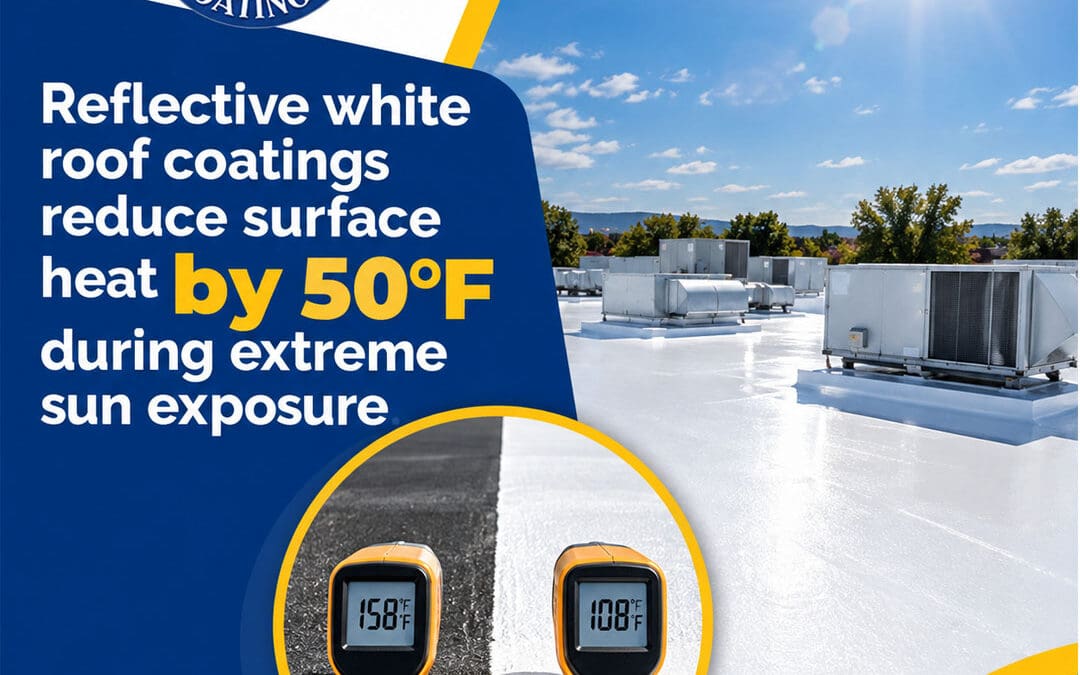
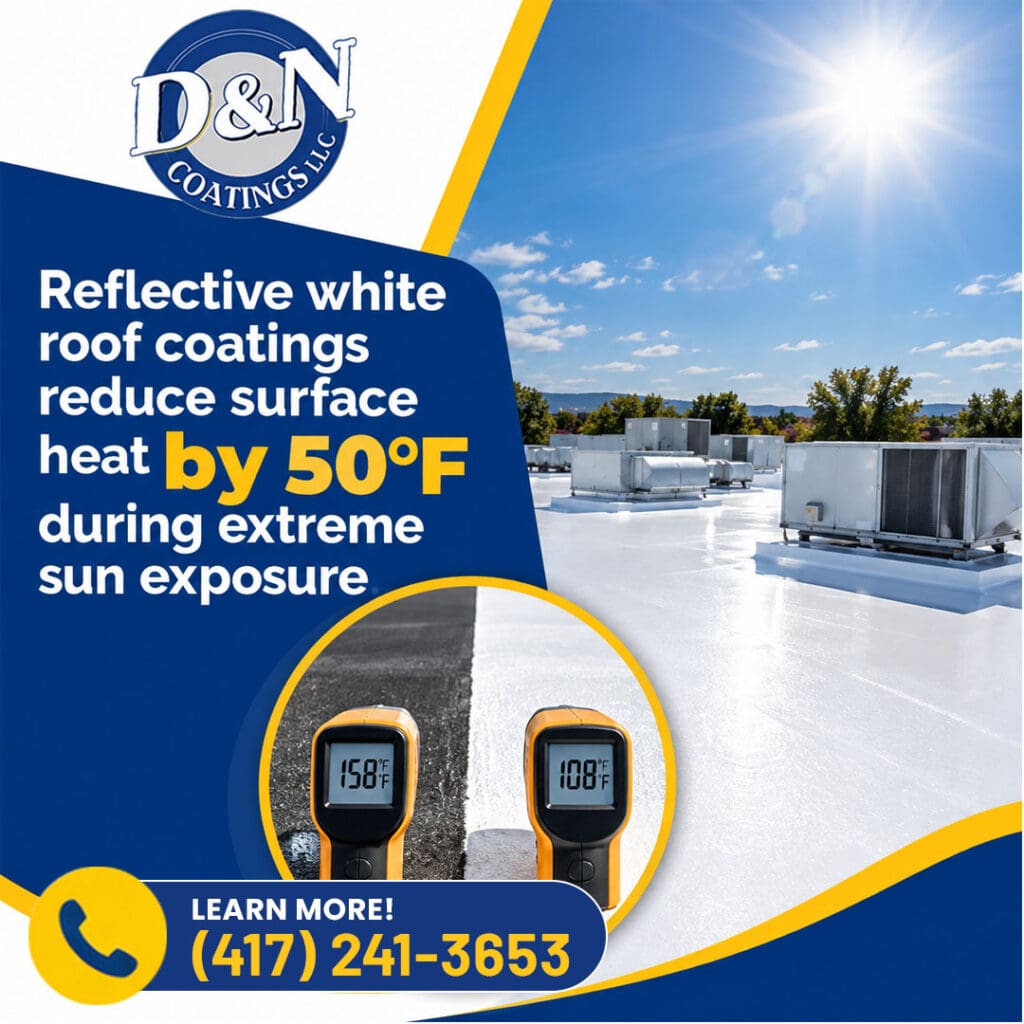
Reflective coatings, in particular, can lower a roof’s surface temperature and reduce the amount of heat that transfers into a building. According to ENERGY STAR’s guidance on cool roofs, a clean white roof reflecting 80% of sunlight can stay about 50°F cooler than a grey roof reflecting only 20%, which is why coating color and reflectivity matter for commercial energy costs.
How Silicone and Acrylic Coatings Differ
Silicone and acrylic are the two most commonly requested coatings for commercial buildings. Silicone holds up better under ponding water and direct sun, while acrylic tends to cost less upfront but requires drier conditions to perform well long-term. The best roof coating for metal roofs often leans toward silicone rather than acrylic, since panel seams and fastener points need extra flexibility.
How Do These Roof Coating Types Compare?
| Coating Type | Best Roof Condition | UV Resistance | Typical Lifespan |
| Silicone | Flat or ponding-prone roofs | Excellent | 15 to 20 years |
| Acrylic | Sloped, well-drained roofs | Good | 10 to 15 years |
| Elastomeric | Roofs with wide temperature swings | Good | 10 to 15 years |
| SPF | Roofs needing added insulation | Moderate | 15 to 20 years |
What Factors Should Influence Your Roof Coating Choice?
Your existing roof material, drainage, and local climate should guide which coating type makes sense, more than price alone. A coating that performs well on a membrane roof may not hold up the same way on metal, which is why roof surface type is usually the first thing a roof coating contractor will assess during an inspection. The best roof coating for metal roofs typically prioritizes flexibility and corrosion resistance over upfront cost.
Why Local Knowledge Matters When Selecting a Coating
Missouri’s mix of humidity, hail, and temperature swings affects how different coatings perform over time. At D&N Coatings, we’ve applied coating systems across Central and Southwest Missouri, and we factor regional weather into every recommendation.
If you’re comparing roof coating companies for an upcoming project, ask how each one accounts for local climate conditions in their coating selection process. This matters especially for metal roof coating contractors in Springfield, since panel systems react differently to heat and moisture than membrane or built-up roofs.
Frequently Asked Questions
Can multiple coating types be combined on one roof?
In some cases, a base coat and a topcoat of different but compatible materials are used together for added durability, though this depends on the roof system.
Does roof coating color affect performance?
Lighter colored coatings reflect more heat, which can reduce cooling costs, while darker coatings absorb more heat and may wear faster in direct sun.
How soon after coating can a roof handle foot traffic?
Most coatings need at least 24 to 72 hours to cure before regular foot traffic resumes, depending on temperature and humidity during application.
Do roof coatings require reapplication over time?
Yes, most coatings need a recoat every 10 to 20 years, depending on the material, exposure, and how well the roof was maintained in between.
Ready to Explore Your Roof Coating Options?
If you’re unsure which coating type fits your commercial roof, the D&N Coatings team can walk you through the options based on your roof’s condition and Missouri’s weather patterns. Call us today at (417) 241-3653 to schedule an assessment.