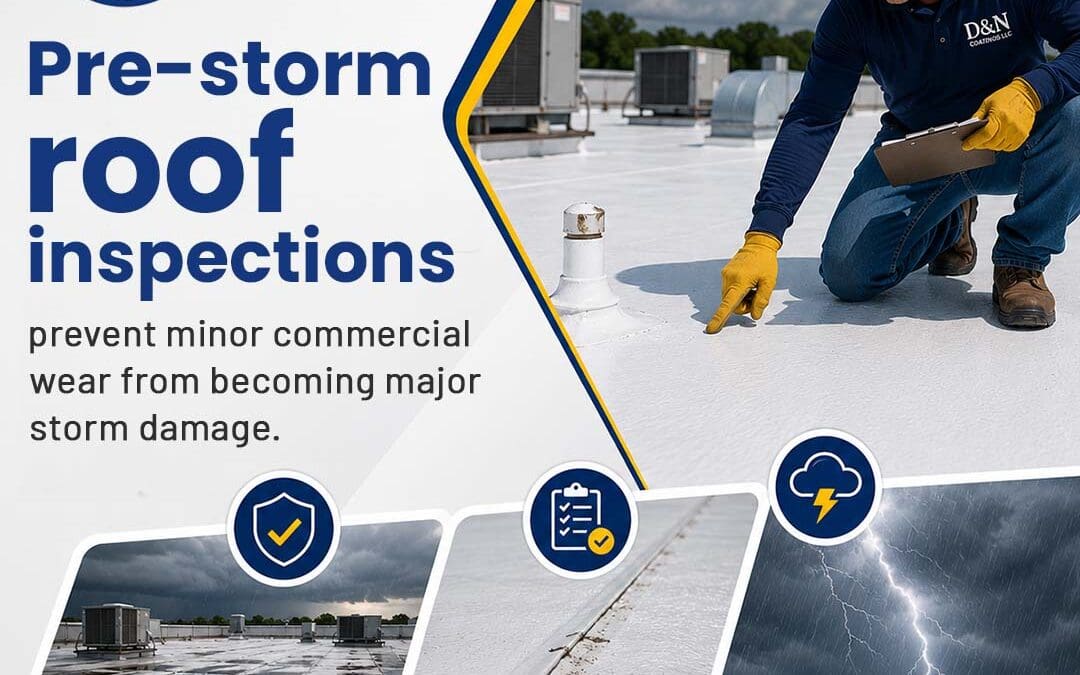
Preparing a commercial roof for storm season means scheduling a professional inspection, clearing drains, securing loose flashing, and documenting current roof conditions before severe weather hits. At D&N Coatings, we help property owners complete these checks early. Roofing contractors in Springfield see that buildings skipping pre-storm inspections face far more roof repair once high winds, hail, and heavy rain move through Southwest Missouri.

Why Should You Inspect Your Roof Before Storm Season?
A pre-storm inspection identifies weak points, like loose flashing or clogged drains, while they are still inexpensive to fix. Catching these issues early prevents minor wear from turning into major structural damage once severe weather arrives.
According to Ready.gov’s Ready Business Toolkits, businesses should follow hazard-specific preparedness guidance for severe weather events like hurricanes and severe wind before storm season arrives. Applying that same principle to roof maintenance means addressing vulnerabilities on the roof itself, not just inside the building.
Storm-Ready Roof Checklist
| Area to Check | What to Look For | Why It Matters |
| Drains and gutters | Debris, leaves, blockages | Prevents ponding and water backup |
| Flashing | Loose, rusted, or lifted edges | Stops wind from getting underneath the roof |
| Seams and penetrations | Gaps around vents, pipes, HVAC curbs | Blocks wind-driven rain intrusion |
| Rooftop equipment | Loose fasteners, unsecured units | Prevents equipment from becoming storm debris |
| Overall surface | Cracks, bubbling, or worn coating | Identifies areas prone to failure under stress |
What Steps Should You Take to Prepare Your Roof?
The most effective storm preparation steps combine a professional inspection with a handful of practical, low-cost fixes that reduce vulnerability. These steps work together rather than replacing one another.
Key steps
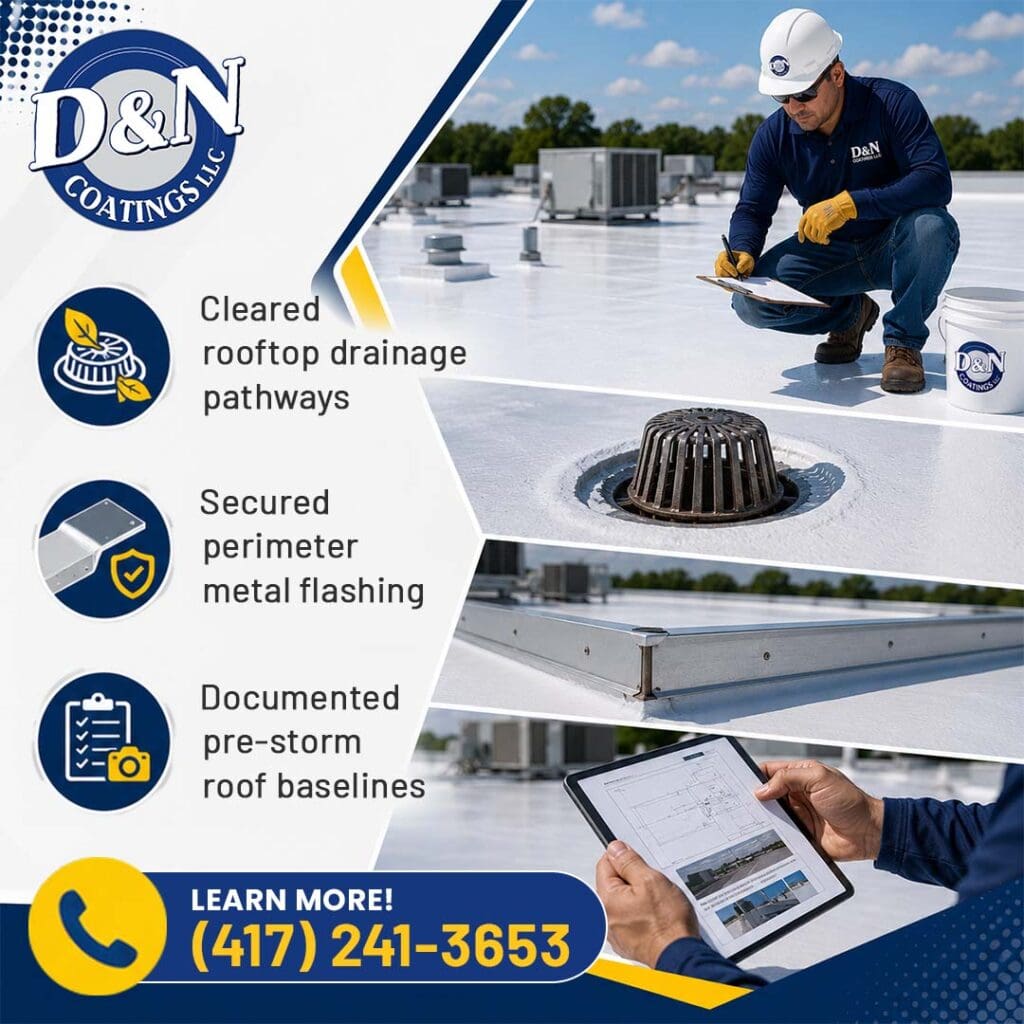
- Schedule a professional roof inspection focused on drainage, flashing, and seams
- Clear all drains, gutters, and downspouts of debris
- Secure or replace loose flashing along roof edges and penetrations
- Photograph current roof conditions for insurance documentation
- Address any minor repairs before they can worsen under storm stress
Completing these steps early gives property owners a documented baseline to compare against if storm damage occurs later. Working with experienced roofing contractors in Springfield can make this process far more thorough than a self-guided walkthrough.
How Do Metal Roofs Require Different Storm Prep?
Metal roofs need extra attention to seam integrity and fastener condition, since wind uplift tends to target these connection points first. A fastener that has backed out slightly or a seam that has started to separate can widen quickly under sustained wind pressure.
Metal roofers in Springfield, MO, typically check panel overlaps and seam sealant condition as part of a pre-storm inspection, since these areas are the most common failure points on metal roofing systems during high wind events.
What Should You Do If You Notice Damage Before a Storm?
Any visible damage found during a pre-storm inspection should be addressed immediately rather than deferred until after the season. Waiting on known issues increases the odds that a minor problem becomes a major failure once severe weather hits.
Our team at D&N Coatings prioritizes based on how likely each issue is to worsen under wind or rain pressure, starting with drainage and flashing concerns since these tend to escalate fastest. Buildings with a documented commercial roofing history typically move through this process faster, since there’s already a baseline to compare against.
Frequently Asked Questions
How far in advance should storm season prep begin?
Most property owners schedule inspections several weeks before peak storm season to allow time for any repairs to be completed.
Does storm damage typically show up immediately?
Not always. Some damage, like slow leaks from compromised seams, can take days or weeks to become visible inside the building.
Should rooftop HVAC units be inspected separately?
Yes, HVAC curbs and surrounding flashing should be checked specifically, since they are common points of water intrusion during storms.
Is storm prep different for flat roofs versus sloped roofs?
Flat and low-slope roofs need extra attention to drainage and ponding, while sloped roofs are more prone to wind uplift at the edges and ridge lines.
Get Your Roof Storm-Ready
Don’t wait for the next storm to find out where your roof is vulnerable. Call D&N Coatings at (417) 241-3653 to schedule a pre-storm inspection today.