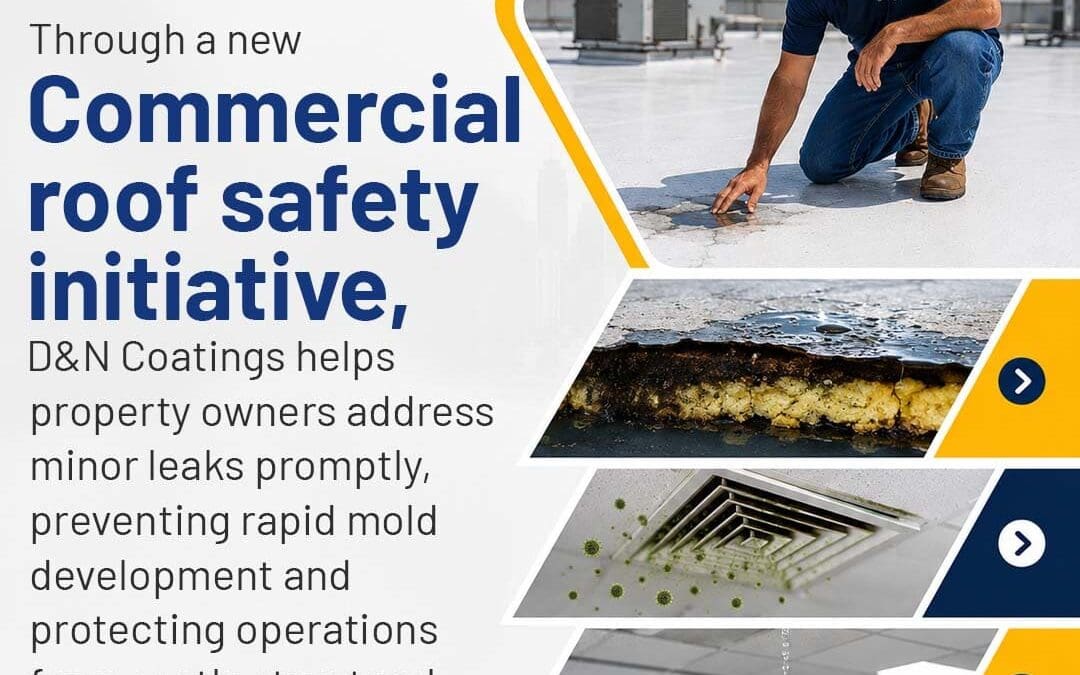
Yes, even a minor roof leak can trigger mold growth within 24 to 48 hours. Moisture spreads fast once it enters a building. It moves through insulation, drywall, and HVAC systems. The result is indoor air quality problems that put occupant health and building integrity at risk. At D&N Coatings, we recommend scheduling prompt roof repair the moment you spot any sign of a leak.
How Fast Can a Leak in My Roof Trigger Mold Growth?
Mold needs only three things to grow: a surface, warmth, and moisture. A small roof leak delivers all three directly into your ceiling and wall cavities. According to the U.S. Environmental Protection Agency, mold can begin colonizing wet building materials in as little as 24 to 48 hours.
Once mold takes hold, spores circulate through your ventilation system and spread to areas that never had direct water contact.
Which Parts of My Commercial Building Are Most Vulnerable to Moisture Damage?
Not every material responds to moisture the same way. Here is a quick comparison of how common building materials hold up under a slow leak:
| Material | Mold Risk Level | Time to Visible Mold |
| Fiberglass insulation | High | 24 to 48 hours |
| Drywall / gypsum board | High | 24 to 72 hours |
| Wood decking / joists | Medium-High | 48 to 96 hours |
| Concrete / masonry | Low-Medium | 1 to 2 weeks |
| Metal roofing substrate | Low (surface) | Varies by coating |
Years of experience in commercial roofing have shown us that metal roofs with compromised coatings or failed seams are one of the most common hidden entry points for moisture. The metal itself resists mold, but the materials directly beneath it do not.
What Indoor Air Quality Problems Can a Leak in My Roof Cause?
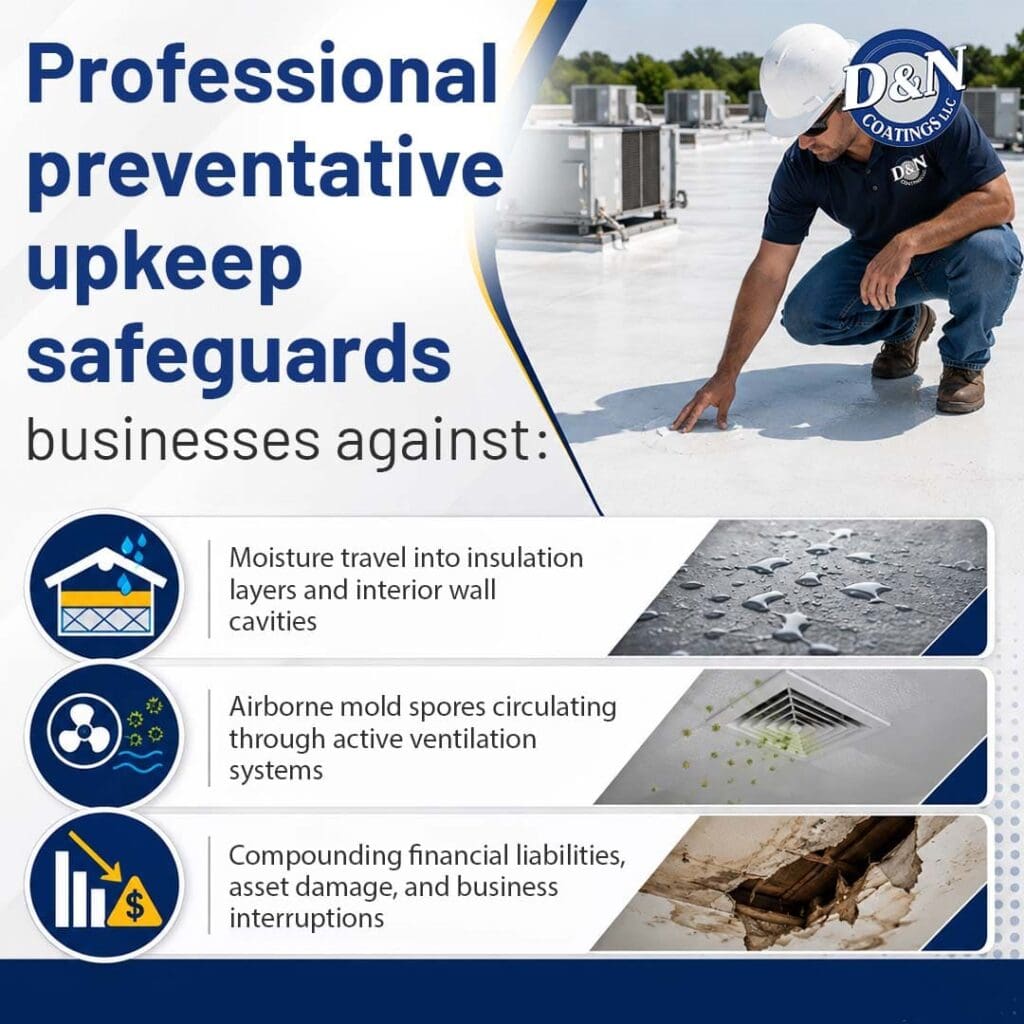
A leaking roof introduces more than visible water. The air quality problems that follow include:
- Mold spores circulating through the HVAC ductwork
- Musty odors embedded in ceiling tiles and insulation
- Volatile organic compounds (VOCs) released by mold colonies
- Increased humidity levels that worsen respiratory conditions
- Bacteria growth in standing water pooled above drop ceilings
Does My Roof Type Determine How Fast a Leak Turns Into a Mold Problem?
Flat and low-slope commercial roofs pond water more readily than pitched roofs. This increases both leak frequency and how long moisture stays in contact with building materials. Metal roofs with aging lap seams or worn coatings allow water to wick underneath without any obvious drip point inside the building.
As roofing contractors in Springfield, D&N Coatings regularly identify these slow, hidden leaks during commercial roof inspections before they reach the interior. Catching them early is far less costly than remediating mold after the fact.
Frequently Asked Questions
Can I dry out the area and skip the roof repair?
Drying the interior helps, but it does not stop water from re-entering. Without fixing the source, moisture will return with the next rain, and mold will follow again. Professional roof repair addresses the root cause.
How do I know if mold from a roof leak is already affecting my air quality?
Persistent musty odors, visible dark staining on ceiling tiles, and unexplained allergy-like symptoms among occupants are the most common early indicators.
Will my commercial property insurance cover mold caused by a roof leak?
Coverage depends on your policy and how long the leak went unaddressed. Insurers often deny claims for mold resulting from neglected maintenance. Documenting repairs promptly with a licensed contractor strengthens your position.
Are metal roofs more or less likely to cause mold problems than flat roofs?
Metal roofs themselves resist mold, but their seams, fasteners, and coatings degrade over time. When those fail, water infiltration can be just as damaging as on a flat roof. Our metal roofers in Springfield, MO, inspect and restore these vulnerable points before leaks develop.
Steps To Take When a Commercial Roof Leak Is Spotted
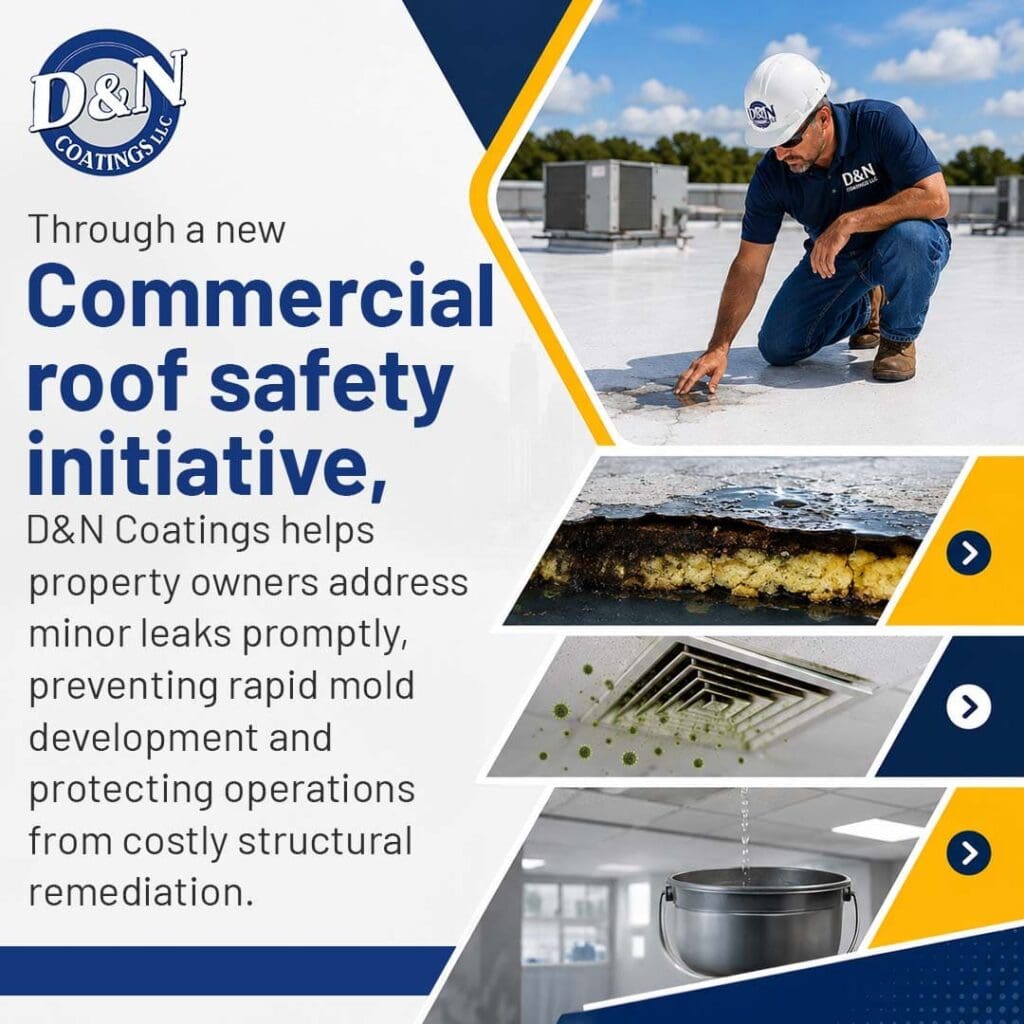
A drip today can mean thousands in mold remediation tomorrow. Our roofing contractors in Springfield know how Missouri weather strains commercial roofing systems, and we respond quickly to prevent small issues from growing.
D&N Coatings serves businesses across Central and Southwest Missouri with detail-driven roof repair, honest assessments, and fair pricing. Contact our team at (417) 241-3653 to schedule a roof inspection and get ahead of any moisture damage before it turns into a costly mold problem.