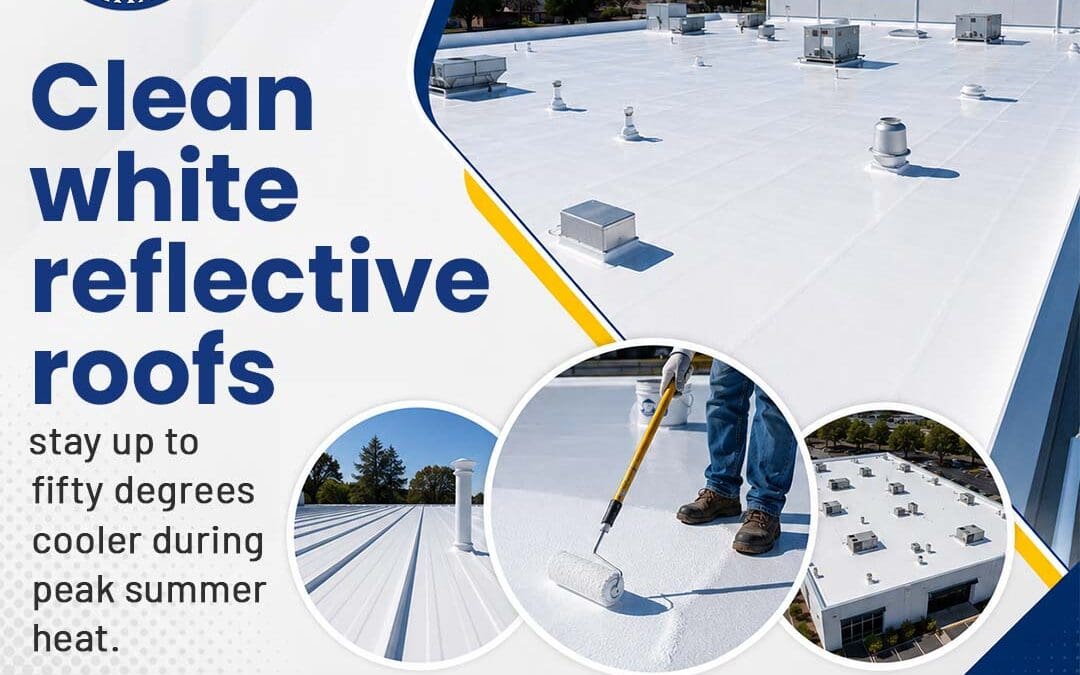
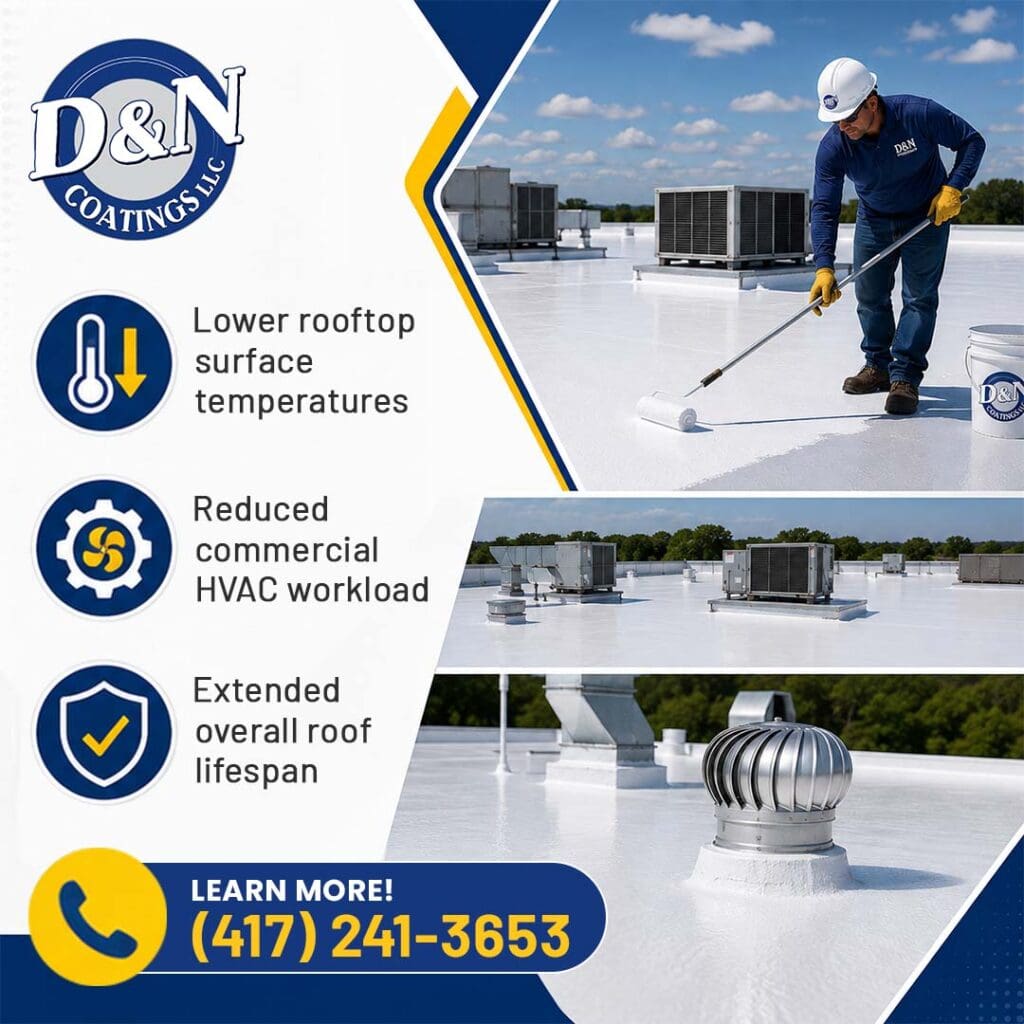
Eco-friendly roof coatings reflect heat, reduce HVAC strain, and extend roof life for Springfield businesses. At D&N Coatings, we apply reflective coatings that lower rooftop surface temperatures, helping property owners cut cooling costs year-round. Traditional dark roofing absorbs heat and overworks HVAC systems. Still, as trusted roof coating companies in Southwest Missouri, we have seen how the right roof coating contractor approach lowers energy use while extending roof life.
What Are Eco-Friendly Roof Coatings?
Eco-friendly roof coatings are reflective, protective layers applied over an existing roof surface to reduce heat absorption and shield the substrate from weather. These coatings typically use silicone, acrylic, or elastomeric formulas that reflect solar radiation instead of absorbing it. Property owners comparing options often start by researching the best roof coating for metal roofs, since metal surfaces respond differently to reflective treatments than shingle or membrane roofs.
How Do Roof Coatings Reduce Energy Costs for Commercial Buildings?
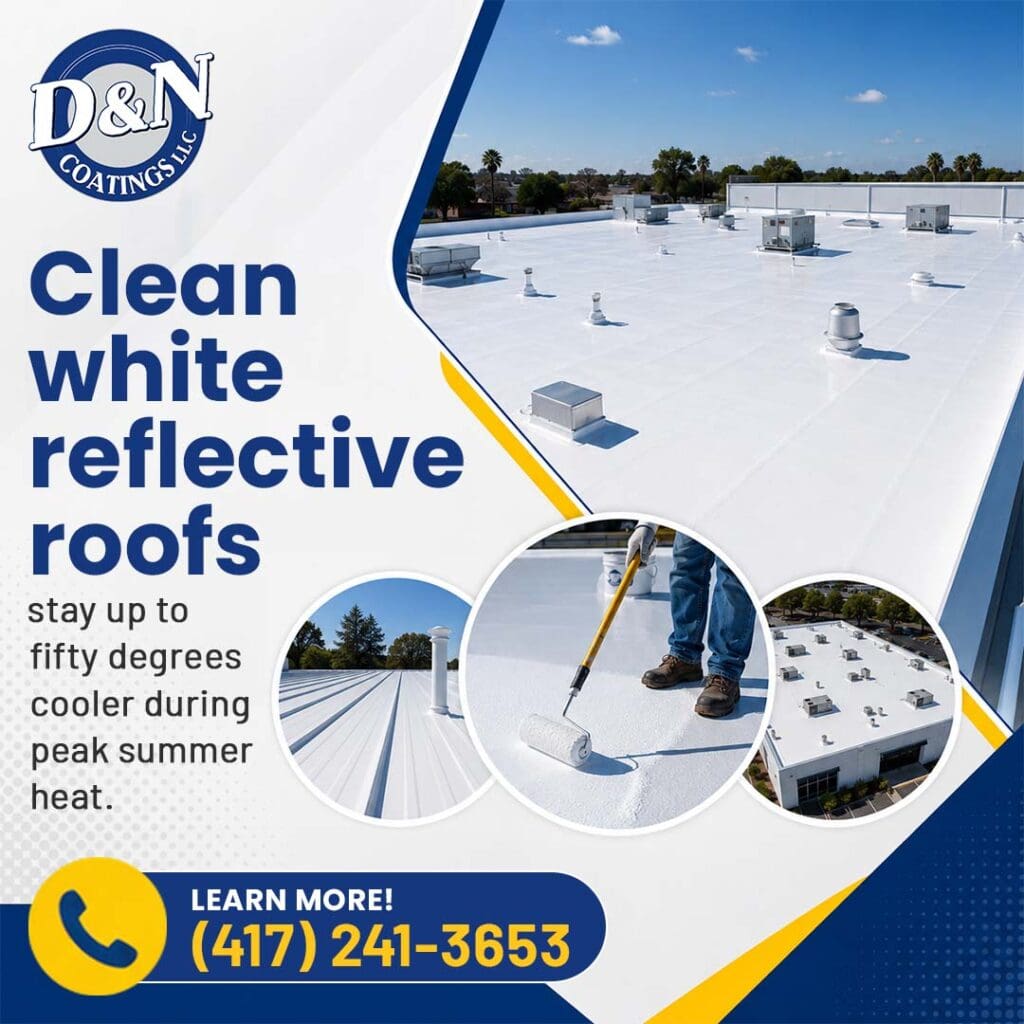
Roof coatings reduce energy costs by lowering the surface temperature of the roof, which reduces heat transfer into the building below. A cooler roof means the HVAC system cycles less often, using less electricity to maintain a stable indoor temperature. This is one reason property owners increasingly turn to metal roof coating contractors in Springfield for reflective solutions rather than full roof replacements.
According to ENERGY STAR, a clean white reflective roof can stay about 50 degrees Fahrenheit cooler than a standard dark roof on a typical summer afternoon.
Reflective Coatings vs. Traditional Roofing Materials
| Feature | Reflective Coating | Traditional Dark Roofing |
| Surface Temperature | Significantly lower | Higher, absorbs heat |
| HVAC Load | Reduced | Increased during peak heat |
| Installation Disruption | Minimal, applied over existing roof | Requires tear-off in most cases |
| Expected Lifespan Extension | Adds years to existing roof | Standard wear timeline applies |
| Upfront Project Scope | Smaller, coating application | Larger, full replacement |
What Types of Roof Coatings Work Best for Metal Roofs?
The best roof coating for metal roofs depends on the building’s exposure, roof slope, and existing substrate condition. Metal roofs benefit most from coatings that flex with temperature changes and resist ponding water. Many of the roof coating companies operating in the region offer similar material options, but application quality is what determines long-term performance.
Common Types
- Silicone coatings, known for UV resistance and performance in areas with standing water
- Acrylic coatings, a cost-effective choice for moderate climates with good reflectivity
- Elastomeric coatings, valued for flexibility across temperature swings common in Missouri weather
Each option has tradeoffs in cost, durability, and application requirements, which is why a proper roof assessment should guide the final choice.
Why Work With a Professional Roof Coating Contractor?
A professional roof coating contractor evaluates the roof’s condition, drainage, and substrate before recommending a coating system, preventing costly application failures. Improper surface preparation or the wrong coating type can lead to peeling, reduced adhesion, or trapped moisture underneath the coating.
As metal roof coating contractors in Springfield, our team at D&N Coatings inspects seams, flashing, and existing wear points before any coating is applied. This step matters because a coating is only as effective as the surface it’s bonded to. Property owners searching for a dependable roof coating contractor should ask about surface preparation methods, warranty terms, and material manufacturer certifications before moving forward.
Frequently Asked Questions
Does a roof coating work on any roof age or condition?
Most coatings perform best on roofs that are structurally sound with no major existing leaks. A roof inspection helps determine if coating is the right fit or if repairs are needed first.
How long does a roof coating typically last?
Depending on the material and maintenance, roof coatings generally last between 10 and 20 years before recoating is recommended.
Will a roof coating stop existing leaks?
Coatings are primarily preventive and reflective, not a substitute for structural repairs. Existing leaks should be addressed through roof repair services before coating application.
Is roof coating a good option for metal roofs specifically?
Yes, metal roofs respond well to coatings when properly prepped, since the reflective layer helps offset metal’s natural heat conductivity.
Ready to Lower Your Roof’s Energy Costs?
If your Springfield property is due for a roof upgrade, our team can walk you through coating options suited to your building’s needs. Call D&N Coatings at (417) 241-3653 to schedule an assessment.