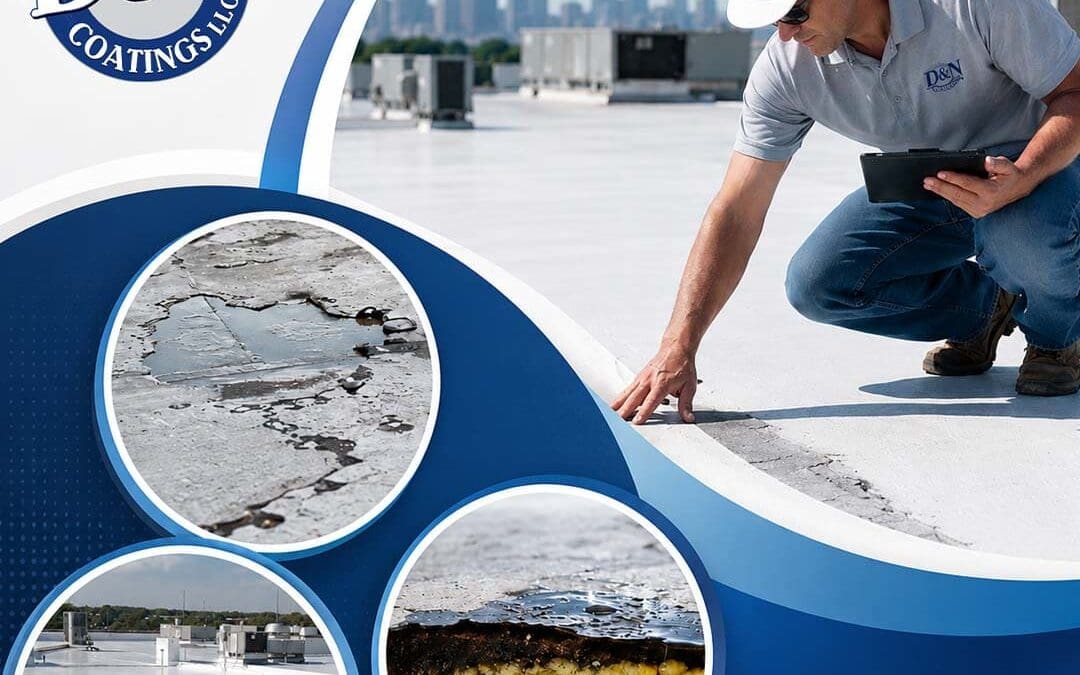
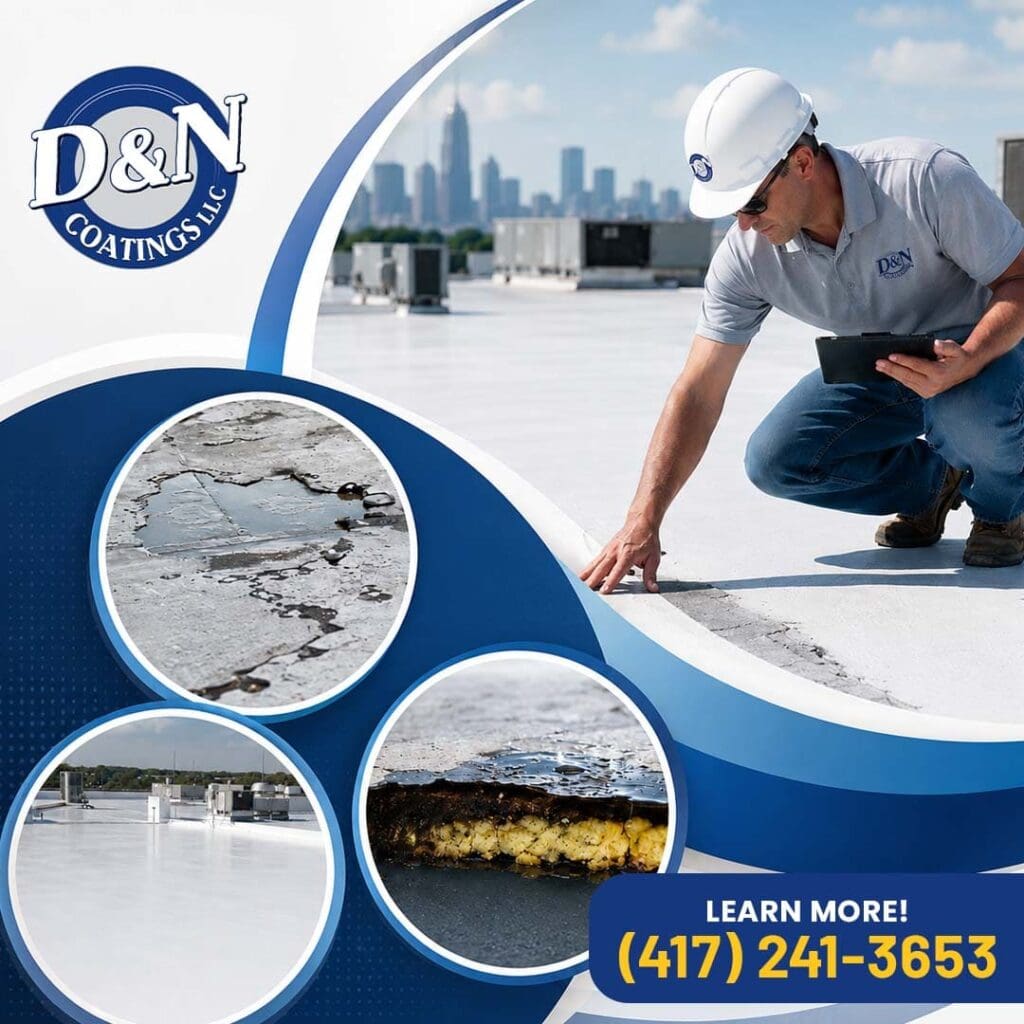
Commercial roofs crack, bubble, and leak because of UV degradation, trapped moisture, and coating systems that were either poorly applied or have reached the end of their service window. At D&N Coatings, we trace each symptom back to its source before recommending any repair, because treating the surface without fixing the cause delays the next failure.
Why Do Coatings on My Commercial Roof Start Cracking or Peeling?
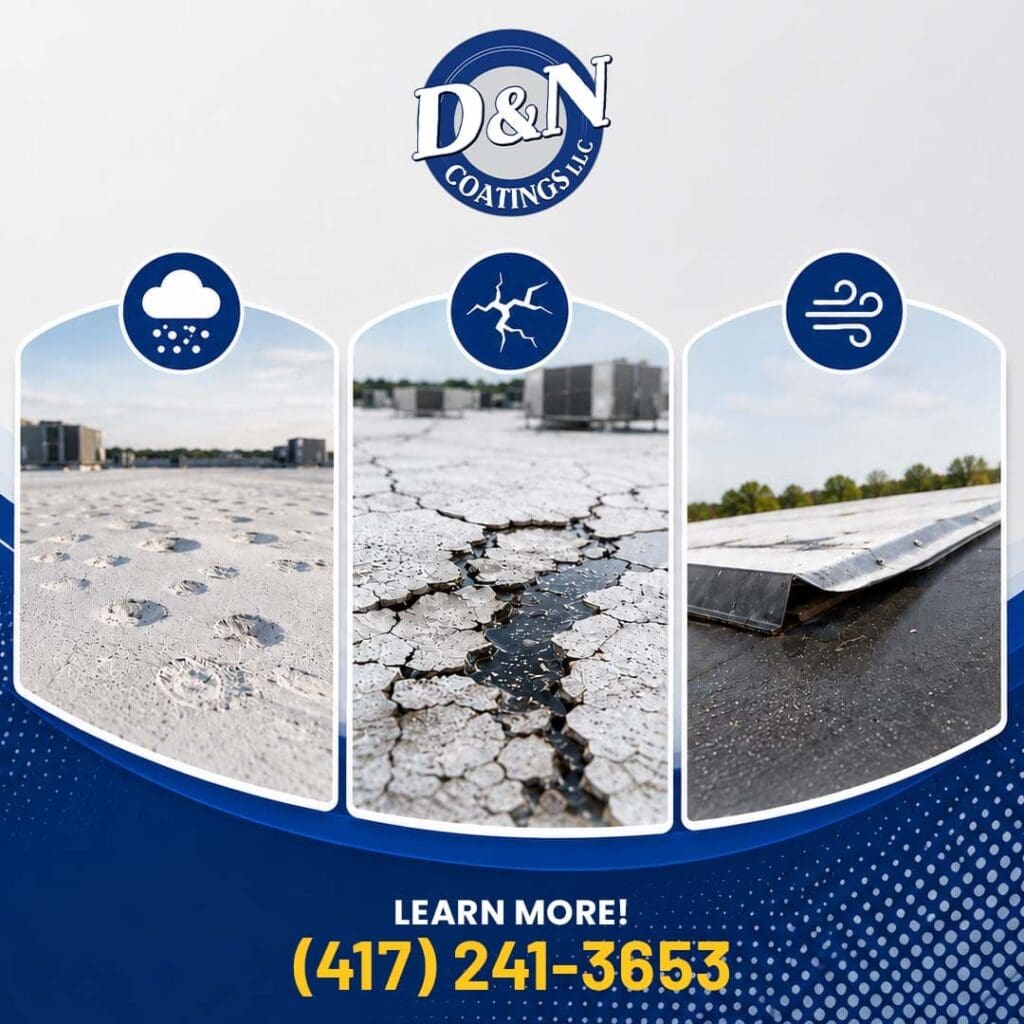
UV rays break down coating materials over time, making them brittle and causing them to crack, peel, and lose their bond to the substrate. According to the U.S. Department of Energy, roofing systems are highly susceptible to UV damage and depend on a protective coating to maintain their waterproof integrity.
Once the coating loses integrity, water pushes into seams, fastener holes, and overlaps with every rain cycle.
Signs Your Coating Is Failing
- Visible cracking or alligatoring across flat roof sections
- Peeling or flaking coating around seams and edges
- Fading or chalking surface color indicates oxidation
- Water staining on interior ceilings with no obvious puncture
What Causes Bubbling on My Flat or Metal Commercial Roof?
Bubbling is almost always a moisture problem. Water that enters through a small breach gets trapped between the membrane and the substrate. When the roof heats up, that trapped moisture expands and pushes the membrane upward.
Applying a coating over a damp or inadequately cleaned substrate is one of the most common reasons blistering occurs. A bubble that is left alone will eventually rupture, leaving an open entry point with a likely wet substrate beneath.
Do I Need a Roof Coating or a Full Replacement?
| Roof Condition | Recommended Action |
| Surface cracking, substrate intact | Recoat with compatible system |
| Isolated bubbles, no rupture | Cut, dry, patch, then recoat |
| Active leak at seam or penetration | Mechanical repair first, then recoat |
| Widespread membrane delamination | Full section replacement before coating |
| Saturated or rotted substrate | Full replacement required |
The best roof coating for metal roofs bonds directly to a clean, dry, sound surface. When we assess a roof at D&N Coatings, substrate condition is the first thing we check before recommending any coating system.
What Should I Ask a Roof Coating Contractor Before Hiring Them?
Searching for metal roof coating contractors near you returns a mix of general roofers and specialty applicators. Before signing any agreement, ask a roof coating contractor to walk you through their surface preparation steps in writing.
Roof coating companies that cannot explain their prep process in specific terms are a risk. The right contractor will document moisture readings, specify coating thickness, and provide a written scope before work begins.
Frequently Asked Questions
Can bubbling be repaired without replacing the whole membrane?
In most cases, yes. We cut out the affected section, dry the substrate, and patch before recoating. Full membrane replacement is only necessary when the substrate beneath is saturated or structurally compromised.
Does cracking always mean my roof is at the end of its life?
Not always. Surface cracking in an aged coating layer does not automatically mean the membrane or substrate below has failed. We assess crack depth and substrate adhesion before recommending a course of action.
How often should a commercial roof coating be reapplied?
Most fluid-applied systems perform best when recoated every 10 years, though annual visual checks help catch early adhesion loss or surface cracking before they turn into active leaks.
Get Your Roof Assessed Today
If your commercial roof is showing cracks, bubbles, or slow leaks, D&N Coatings serves Springfield, Hartville, and nearby areas across Central and Southwest Missouri. Call us at (417) 241-3653 or request a free estimate to schedule your inspection.